I offered the Wiebe family their full asking price of $430,000 in cash, and they accepted the next morning. After closing on April 22, I had only about $70,000 left to buy equipment, seed, fertilizer, and enough supplies to get through the season. At a farm auction, I purchased a used John Deere tractor for $32,500 and a planter for $9,000. I bought seed from the local co-op and paid in full, knowing every dollar mattered. But there was one risk I couldn’t fix: the deadline for buying crop insurance had passed while I was arranging my husband’s funeral. If hail destroyed the crop or another dry summer ruined the harvest, I could lose nearly everything. Then, standing at the co-op counter, I overheard a conversation that explained why Randy and Scott had been so eager to settle with me. Randy’s son, Luke, was coming home from college to farm with his father and uncle. They planned to move him into the house I was leaving. Luke had carried his father’s brother’s casket at the funeral and cried openly as he walked down the aisle. I loved that boy. I understood why Randy wanted to help his son build a future, but I couldn’t ignore the way he had treated my daughter and me as obstacles to that future. Still, I refused to let bitterness make my decisions.
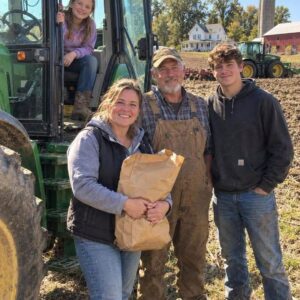
I told Abby about our new home and placed the keys in her hand. “We’re going to farm it,” I explained. “You and me.” She looked frightened. “Do you know how?” I laughed for the first time since Jeff died. I had driven grain carts for nineteen harvests, grown up around farming, and kept the books for our family business for two decades. I knew the work ahead would be difficult, but I also knew I could learn what I didn’t already understand. We moved across the road during the last week of April. Friends from church helped carry our belongings, and my sister brought a stock trailer. When Randy’s wife, Lori, arrived, she stood on the back step and told me she had warned her husband that the funeral was the wrong time to hand me the buyout papers. I thanked her, then watched her drive away. The first planting season was exhausting. I checked equipment before dawn, watched the weather obsessively, and worried over every dollar spent. Some nights, I sat at the kitchen table missing Jeff so badly that I could hardly breathe. But every morning, I opened the curtains and saw his fields across the road. Abby began helping me track the tractor passes, just as she had done when her father was alive. We planted, prayed for rain, and worked through the long summer together. I had lost my husband and the home we had shared, but I hadn’t lost the knowledge, courage, or determination he had helped me build. Randy and Scott thought the buyout would give me a clean break from the farm. Instead, it gave me the chance to begin again on my own terms. And every time I saw Abby watching those fields at sunset, I knew we had found something money alone could never buy: a future that still belonged to us.