The phone contained a message Brenda had accidentally sent to Maisie and then deleted. In it, she admitted that her plan was to use her daughter to gain control of the inheritance left by Grandma Ruth. She even described Maisie as a means to an end. The room fell silent. Brenda tried to blame everyone else, but the truth was already there for everyone to see. When she attempted to grab Maisie’s arm, Dan stepped between them. His children stood beside him, and Rachel, now working at a family law firm, calmly explained that the messages could become powerful evidence in court. Maisie returned the expensive presents and told her mother she couldn’t accept gifts from someone who had only come back because of money. Brenda eventually left, taking her bicycle and tablet with her. But she wasn’t finished. She filed for custody, hoping to gain access to Maisie’s inheritance. This time, however, the truth followed her into the courtroom.
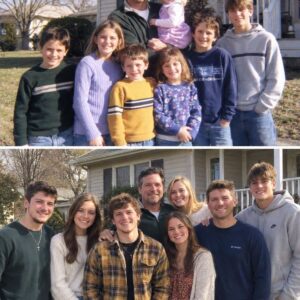
The judge denied Brenda’s custody request, protected Maisie’s inheritance, and ordered her to repay years of unpaid child support. But the most meaningful moment came when the judge read Maisie’s statement aloud: she didn’t hate her mother, but she wanted to stay with the father who had never abandoned her. A year later, on her thirteenth birthday, the family gathered again for another backyard barbecue. That evening, Dan found Maisie sitting in the chair Brenda had left empty for eleven years. She was drawing their little house, the maple tree, and all nine family members standing together. At the top, she had written three simple words: THE BETTER LIFE. Dan finally understood something he had spent years questioning. He hadn’t failed to give his children the life they deserved. He had given them something far more valuable: love, loyalty, and a home where nobody was ever disposable.